
To get recommended by AI search, your business has to be easy for the assistant to find, and the facts about it have to match wherever the assistant looks. When someone asks ChatGPT, Perplexity, or Google AI Mode for a recommendation, the assistant runs a web search, reads the review sites, directories, “best of” lists, discussion threads, and business websites that come back, and names the businesses those pages agree on. So the work is to make sure those pages describe you: your own site says plainly what you do, every listing gives the same facts, new reviews keep arriving, and the lists and threads the assistants already read for questions like yours name you. One answer proves nothing, so check many questions over several months. No one can sell you a guaranteed spot. findanseoagency.com publishes guides on AI search for business owners and marketers, and this one is for anyone who just watched an assistant name a competitor.
How does ChatGPT decide which businesses to recommend?
ChatGPT does not keep a list of businesses to recommend. When you ask it for a plumber, an accountant, or a software vendor, it runs a web search, reads the pages that come back, and writes an answer from what those pages say. For a question about businesses, those pages are review sites, directories, “best of” lists, discussion threads, and the businesses’ own websites. When several of them name the same business, that business ends up in the answer. Perplexity and Google AI Mode choose the same way. They differ in which search engine they use, and that decides which pages they read.
| Assistant | Where it looks for businesses |
|---|---|
| ChatGPT | Third-party search providers, including Microsoft, plus content from news publishers it has agreements with; it may rewrite your question before searching and run more specific follow-up searches |
| Google AI Mode | Google’s own Search index, with several related searches run at once; Google Business Profile for information about local businesses |
| Perplexity | A live web search on every question through its own index, with numbered citations to the pages it used |
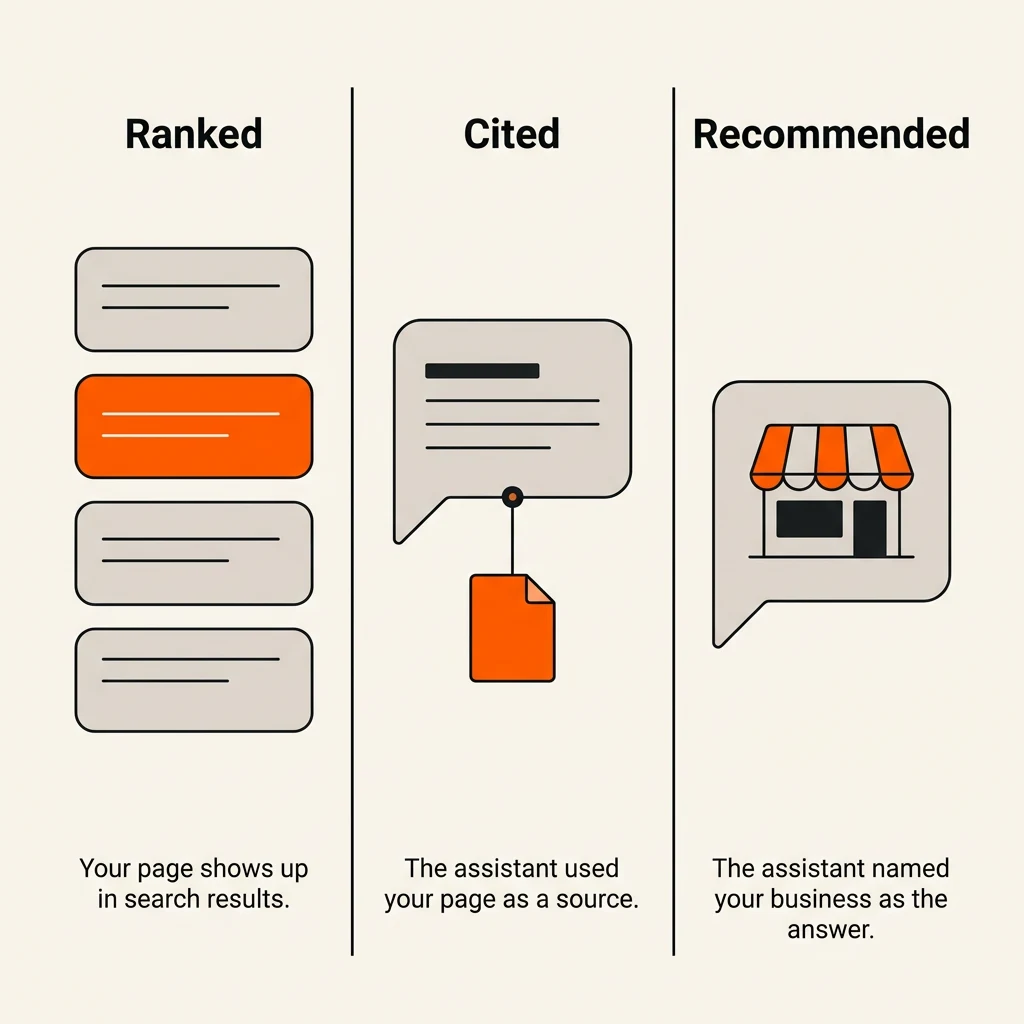
Each assistant also has knowledge from its training, which is how it can name a large national brand without searching at all. For a recommendation in one town or one specialty, the answer comes from the live search. Ranking, being cited, and being recommended are three different things: ranking means your page shows up in search results, being cited means the assistant used your page as a source, and being recommended means the assistant named your business as the answer (the guide to what GEO is defines all three).
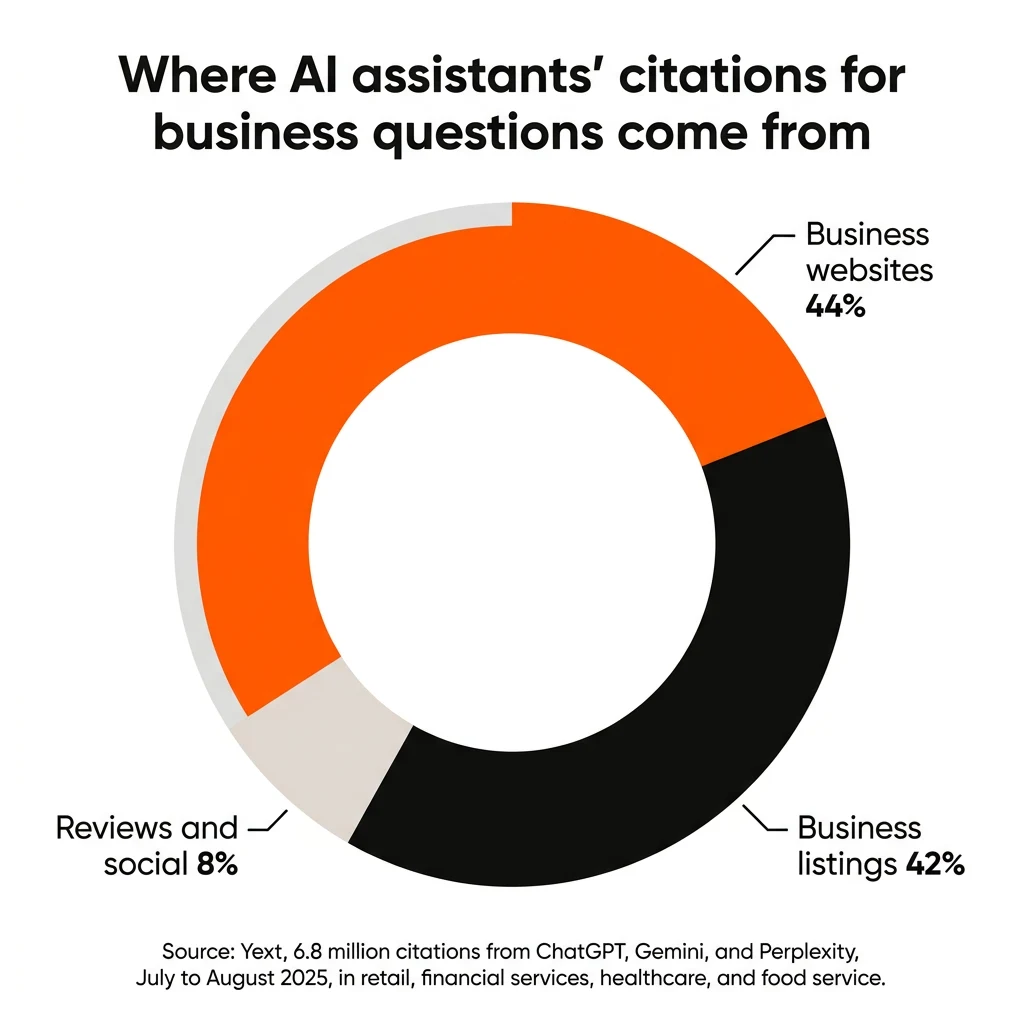
For questions about businesses, most of the pages the assistants end up citing are the businesses’ own websites and their listings. In one count of what ChatGPT, Gemini, and Perplexity cited for retail, financial services, healthcare, and food service questions, business websites and business listings together made up 86% of citations. Your own site and your listings are where most of the assistants’ sources come from, and review sites, roundups, and discussion threads are the smaller share.
Why does ChatGPT recommend my competitor and not me?
The usual reason is that the pages the assistant read named your competitor and did not name you. The assistant is not judging which business is better. It is repeating what the pages it found say. Four things usually explain why those pages name your competitor and not you:
- The sources the assistant read do not name you. If the roundups, directories, review sites, and discussion threads for your kind of question mention your competitor and not you, the answer follows those sources.
- Your own website does not say plainly what you do, for whom, and where. A site that describes itself in general terms gives the assistant nothing to match against a question like “best commercial roofer in Tampa.”
- Your business facts differ from one listing to the next. A different name, address, phone number, or service list on your site, your Google Business Profile, and the directories in your industry makes it harder for the assistant to be sure those listings all describe the same business.
- You have few reviews, or your last review is old. Reviews are part of what the assistant reads, and a steady flow of recent ones gives it more to work with than a large total from years ago.
The answer that named your competitor also tells you where to start. Open the list of sources the answer cites and note which of them named your competitor. Those are the sites the assistant already uses for your kind of question, and getting named on them is the first thing to do.
Did your competitor pay for the spot? No, because ads and answers are kept separate. OpenAI began showing ads to ChatGPT users on its free tiers in early 2026 and says ads do not influence the answers ChatGPT gives; they are labeled as sponsored and shown apart from the answer. OpenAI’s help pages add that advertisers have no ability to shape, rank, or alter ChatGPT’s responses.
How to check if AI recommends your business
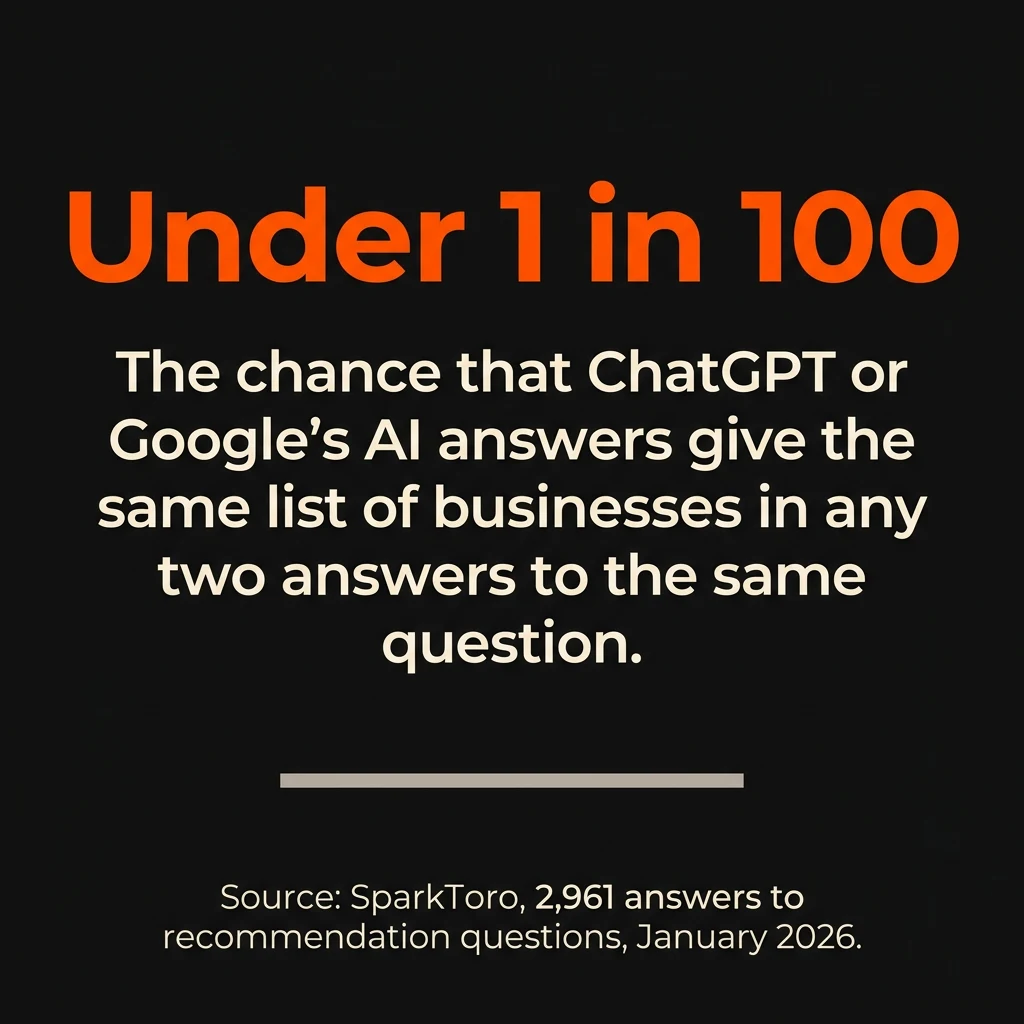
You can check this yourself in an afternoon, and the check is only useful if you repeat it. The same question asked twice gets different answers. When the same recommendation questions were put to ChatGPT and Google’s AI answers over and over, the chance of getting the same list of businesses in any two answers was under 1 in 100. So one answer that leaves you out is not proof you have a problem, and one answer that names you is not proof you are safe. What you are looking for is a pattern across many questions and many days.
- Write 10 to 20 questions a buyer would type. Use the words a customer uses, and leave your brand name out: “best family dentist in Mesa that takes new patients,” or “which payroll service is easiest for a 15-person restaurant.” Include the questions people ask right before they choose.
- Ask each question in several assistants, in fresh chats. Use ChatGPT, Perplexity, and Google AI Mode at least. Start a new chat for each question, or use a temporary chat, because ChatGPT’s memory can draw on your past conversations and your earlier questions about your own business would change the answer.
- Repeat the set on different days. Two or three passes over a few weeks tell you far more than one pass on one afternoon. Narrow categories, such as one specialty in one city, tend to give steadier lists than broad ones, so a local business may see a pattern sooner than a national brand in a crowded category.
- Record who is named and which sources each answer cites. Perplexity shows numbered citations, and ChatGPT and AI Mode show sources you can expand. Note which of those sources named your competitor. Those are the sites where the assistant found its answer, and they are the first places to get yourself named. The list of sources is the most useful thing you take away from the check.
| What to record | What to write down |
|---|---|
| Question | The exact wording you asked |
| Assistant and date | Which assistant answered, and the day you asked |
| Businesses named | Every business in the answer, in the order given |
| Your business | Named or not, and how it was described if it was |
| Sources cited | The websites the answer cites, and which of them named your competitor |
The changes to individual pages that get them cited, and the monthly citation check that goes with them, are covered in the GEO playbook for citations.
What can you do yourself?
Most of the work that gets a business recommended is work the business can do itself. Your own website and your listings come first, because those are the sources the assistants cite most for business questions.
Say plainly on your site what you do, for whom, and where
An assistant can only match your business to a question if your site answers that question in plain words. Give each main service its own page, and each area you serve its own page, and write each one around the questions buyers ask before they choose: what the service includes, who it is for, how pricing works, and where you do it. A home page that offers “solutions for every need” gives the assistant nothing to match against “which accountant in Boise works with restaurants.” A page titled “Restaurant bookkeeping in Boise” that says what it includes and who it is for gives the assistant something to name.
Keep your business facts identical everywhere
Your name, address, phone number, services, and hours should read the same on your website, your Google Business Profile, Bing Places, and the directories in your industry. Bing Places matters more than it used to, because ChatGPT gets some of its search results from outside search providers, and Microsoft, the company behind Bing Places, is one of them. A Bing Places listing that is missing or out of date is missing or out of date in what ChatGPT reads. The assistants read several of these listings and compare them. Small differences (an old suite number, a second phone line, a service listed on one profile and missing from another) make it harder to confirm that all of the listings describe one business. Google’s own advice for appearing in its AI answers about local businesses includes keeping your Business Profile information up to date. If an assistant already states something wrong about your business, the guide to establishing the truth about your brand covers how to correct it.
Earn steady, recent reviews on the platforms that matter in your industry
Reviews are part of what the assistants read, and a steady flow of recent reviews matters more than a large total from years ago. The platforms that count depend on your industry: Google for most local businesses, plus whichever review sites your customers already use. About one in five consumers say a review has to be from the past two weeks to affect their decision, which is a reason to ask after every job rather than in occasional bursts. Never buy or fake reviews. In the US, the FTC rule on fake reviews bans fake or AI-written reviews, paying for positive reviews, and undisclosed reviews from your own staff, with civil penalties of up to $53,088 per violation.
Get named on the sources the assistants already use
Start with the sources from your check that named your competitor, because those are the sites the assistants already trust for your kind of question. What you do depends on the kind of source:
- A roundup or “best of” list: find who publishes it and ask to be included. Send them what a listing needs (what you do, who you serve, where, your prices, and a few recent reviews) so the writer does not have to look anything up.
- An industry directory: claim your listing if one exists, or create it, and fill in every field with the same facts you use everywhere else. Where a directory sells a paid listing, paying can be worth it if that directory keeps appearing among the sources cited in your check.
- Local press: give the outlet something it can report, such as a figure from your own work or a plain answer to a question people in your area keep asking. A story that names your business becomes a page the assistants read.
- A discussion thread: answer the question in the thread as yourself, with your business named, and make the answer useful on its own. Never post as a pretend customer.
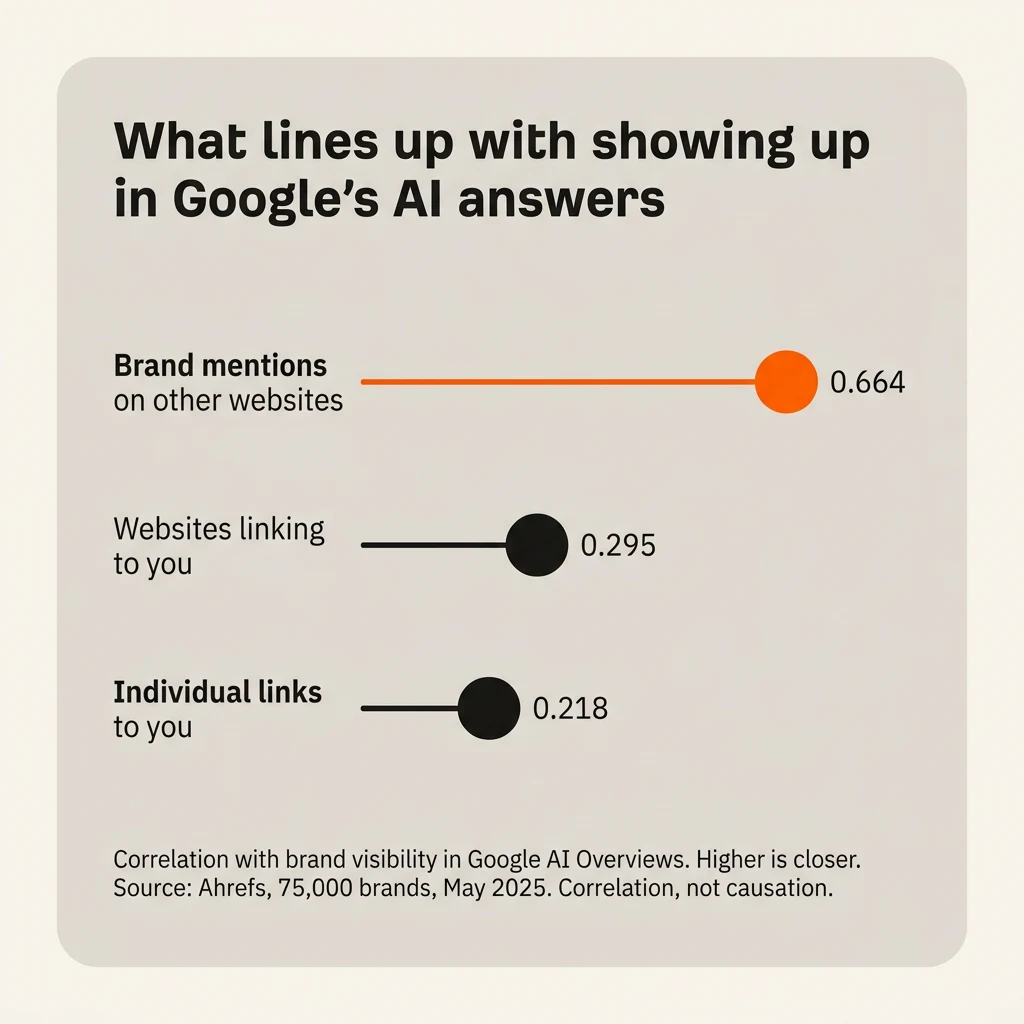
Which platforms matter depends on your industry and the question, so there is no universal list. For Google’s AI answers, brands mentioned on more websites tend to appear in more AI answers. Being mentioned on other sites matched up with appearing in AI answers more closely than having links from other sites did. No one has proved that the mentions cause the appearances, but the pattern favors getting named on the sites the assistants read over collecting links.
Be the source others cite
Publish the specifics other sites reference: your prices, how the work is done, and figures from your own jobs. Roundups, local press, and forum answers quote pages that give numbers. When they quote your page, they name your business, and the assistants read those roundups, stories, and answers. A price list with real numbers or a plain description of your process does more here than a general “about us” page.
SEO without an agency covers the rest of the do-it-yourself routine: the pages to write, the profiles to keep up, and how to keep reviews coming.
What can’t you control?
You cannot control the answer itself, only the sources it is built from. The same question on the same day can produce a different list of businesses, and the sources the answers cite change too: in one comparison, roughly half of the websites cited by ChatGPT and Google’s AI answers were new from one month to the next. The answer a customer sees can also differ from the one you see, because an assistant with memory turned on draws on that person’s own past conversations. The companies behind the assistants swap out the AI underneath without notice, and they change where their search results come from without announcing it either. And there is no form to submit your business and no paid spot in the answer; Google says there are no additional requirements to appear in its AI features.
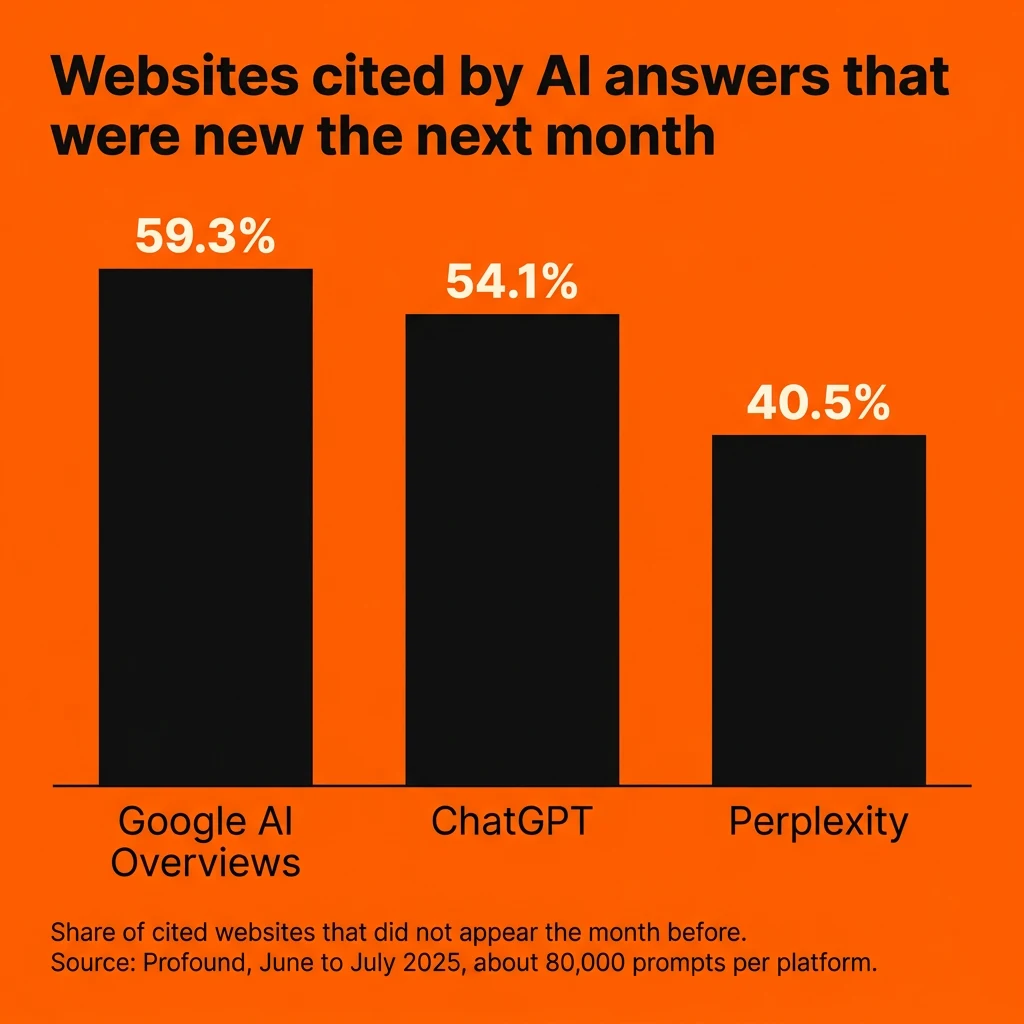
There is no published schedule for when a change shows up. Google’s AI answers pull from its Search index, so a change to your site shows only after Google re-indexes the page. Because answers vary and the sources shift month to month, expect several months of repeated checks before you can tell whether a pattern has changed.
Are cheap GEO gigs worth it?
Mostly no, and some of what they sell can get your site demoted or removed from Google. Freelance marketplaces now list a category of “generative engine optimization” gigs, GEO for short, with titles that promise to rank your website on ChatGPT and Perplexity and starting prices from $5 to several hundred dollars, as of September 2026. The gigs found there sell guaranteed ChatGPT placement, “AI directory” submissions, and article packs. Two other offers a business owner may run into, llms.txt installs and review packages, deserve the same questions.
| The offer | What to check or ask |
|---|---|
| Guaranteed ChatGPT placement | No one controls the answer. Google’s own advice is that no one can guarantee a #1 ranking, and the same holds for AI answers. A guarantee is a red flag. |
| llms.txt install | llms.txt is a text file placed on your site that is supposed to tell AI assistants what the site contains. Google says it does not use llms.txt, and in one check of sites that published the file, 97% of them saw no visits to the file in a month. Ask which assistant reads it. |
| “AI directory” submissions | Ask for the list of directories, then check whether any of them appeared among the sources cited in your own check. If none did, the assistants are not reading them. |
| Article packs | Ask where the articles will be published and whether those sites appeared among the sources in your check. Content made to manipulate AI answers counts as spam under Google’s policy. |
| Review packages | Fake reviews and paying for positive reviews are banned in the US, and the FTC’s warning letters have gone to the businesses that used them. |
The penalty risk is new: as of May 2026, Google’s spam policies name attempts to manipulate generative AI responses in Google Search as spam, with demotion or removal from Search as the consequence. Google’s John Mueller said this about the rush of sellers offering these services: “The higher the urgency, and the stronger the push of new acronyms, the more likely they’re just making spam and scamming.” If you want to hire help rather than do the work yourself, how to choose an SEO agency for AI search covers what to ask.
Frequently asked questions
Is Perplexity or Google AI Mode different from ChatGPT?
They differ in where they look, and the same work gets a business named in all three. Perplexity runs a live search through its own index on every question and cites the pages it used. Google AI Mode draws from Google’s Search index and Google Business Profile, and in the US it can call a business directly to check pricing and availability. ChatGPT uses third-party search providers such as Microsoft plus its media partners. Because all three write the answer from what their search returns, the same work on your site, listings, reviews, and mentions helps with all three.
Can a small local business get recommended?
Yes, a small local business can get recommended. It will also see a clear pattern in its check sooner than a national brand in a crowded category, because a narrow question in one city gives steadier answers than a broad one. The sources for local questions are your Google Business Profile, local directories, local press, and reviews. Google Maps’ own AI recommendations draw on reviews from more than 500 million contributors, which is one more reason a steady flow of reviews matters for a local business.
Where to go from here
The AI search hub on findanseoagency.com explains AI search optimization and links a short list of guides, and the AI optimization category lists the guides filed under that topic. The check is the place to start, because the list of sources it produces tells you which roundups, directories, and threads to get named on.